Attic moisture in Gulf Coast homes comes from four sources: roof leaks, condensation, bathroom fans venting into the attic, and HVAC condensate line failures. The fix depends entirely on which source is active — and getting it wrong means the mold comes back. A roof leak is a Tier 1 roofing problem. Condensation, bathroom fans, and HVAC issues are Tier 3 problems that do not require a roofer.
After reading this page, you'll understand the four moisture pathways, know how to identify which one is affecting your attic, and have a clear path to the right fix for each.
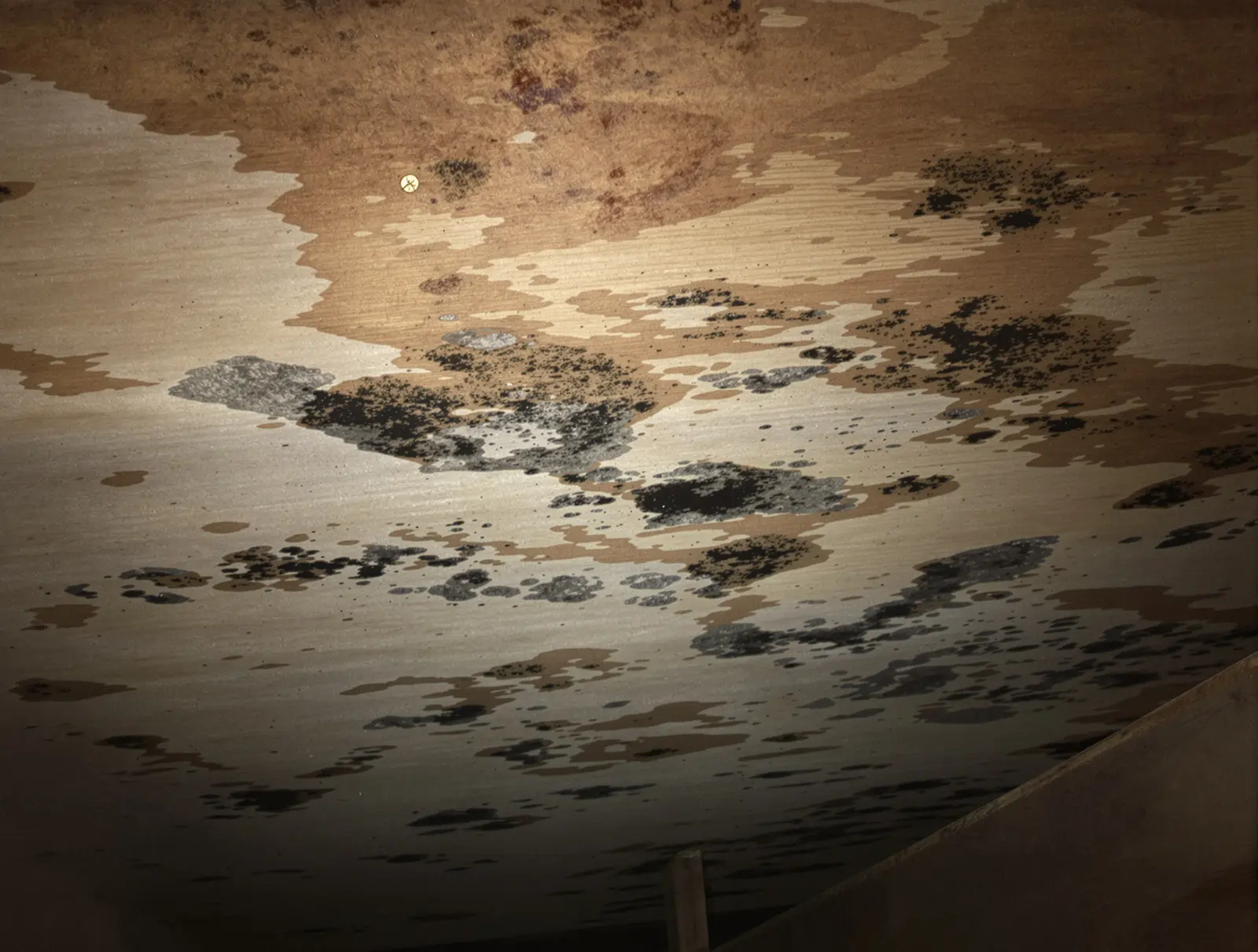
The Four Moisture Pathways into Your Attic
Every attic moisture problem on the Gulf Coast traces back to one of four sources. Each source has different warning signs, different fixes, and a different professional to call. Misidentifying the source is the most expensive mistake homeowners make — they pay for mold remediation, the mold returns in 6 months, and the underlying cause was never addressed.
The four pathways are: roof leaks, condensation, bathroom fan discharge, and HVAC condensate failures. In Gulf Coast homes from Biloxi to Pensacola, condensation and bathroom fan issues are far more common than roof leaks as moisture sources. This surprises most homeowners, who assume water in the attic must mean a leaking roof. Learning to distinguish a roof leak from condensation is the most important diagnostic skill for this section.
Each pathway has a different diagnosis tier under the three-tier model. A genuine roof leak is Tier 1 — that is a roofing problem requiring a roofer. Condensation, bathroom fan issues, and HVAC problems are Tier 3 — they require an HVAC technician, insulation contractor, or general contractor, not a roofer. Getting the diagnosis right before spending money is critical.
Four Moisture Pathways into Your Attic
Click each pathway to learn how to identify it, its severity, and what to do about it.
Check Yours: Moisture Warning Signs
Answer these four questions based on what you have observed in your attic.
Think about it...
A homeowner finds dark stains on the underside of their roof deck in several locations, but only on the north-facing slope. There's no active dripping. Is this more likely a roof leak or condensation?
Pathway 1: Roof Leaks (Tier 1 — Roof-Related)
A roof leak introduces liquid water directly into the attic through a failure in the roofing system. Common entry points include damaged or missing shingles, failed flashing around chimneys and plumbing vents, deteriorated pipe boot seals, and nail pops that create holes in the sheathing. On the Gulf Coast, wind-driven rain during summer storms is the most common trigger.
Roof leak indicators are localized and follow gravity. You will see water stains that track from a specific point on the roof deck, often following a rafter or running along the sheathing grain. The stain pattern typically leads upslope from the visible damage to the actual entry point. Active leaks produce dripping during or shortly after rain.
Roof leaks require prompt attention. A small roof leak that wets the sheathing intermittently can cause mold growth within 48-72 hours in Gulf Coast humidity. The fix is a roofing repair — patching, reflashing, or replacing the damaged section. If you identify a roof leak, get it inspected by a roofer. Roof Decision Guide has a detailed leak assessment framework.
Cost to repair varies by scope. A simple pipe boot replacement costs . Flashing repair around a chimney costs . A larger area of damaged shingles may require a partial reroof.
Common misconception:
Water stains on the attic floor or ceiling mean the roof is leaking.
Gulf Coast reality:
On the Gulf Coast, condensation causes more attic water stains than roof leaks. Condensation forms on cold AC ductwork and drips onto insulation and ceiling drywall below, creating stains that look identical to a roof leak. Before calling a roofer, check whether the staining is near ductwork or near a roof penetration — the location tells you the likely source.
Pathway 2: Condensation (Tier 3 — Not a Roof Problem)
Condensation is the most common and most misunderstood moisture source in Gulf Coast attics. It occurs when warm, humid air contacts a surface cooler than its dew point. In a Gulf Coast attic, the dew point of incoming air is typically 72-78°F from May through October. Any surface below that temperature — AC supply ducts at 55-60°F, the underside of the roof deck after nighttime cooling, or metal framing members — becomes a condensation target.
Condensation follows a daily cycle on the Gulf Coast. During the day, the attic heats to 130-150°F and everything is above the dew point — no condensation. At night, the roof deck radiates heat and can drop below the outdoor dew point within 2-3 hours of sunset. Humid air that entered through ventilation openings during the day condenses on the cooled surfaces. By morning, the deck may be wet. By afternoon, it has dried again. This invisible cycle repeats all summer.
The damage accumulates invisibly. Each condensation cycle wets the wood slightly and dries it again. Over weeks and months, the repeated wetting feeds mold growth on the wood grain. The homeowner sees nothing until dark staining appears — typically on the north-facing roof deck where less solar heating occurs. Learn why Gulf Coast attics are uniquely vulnerable to condensation.
Condensation is NOT a roofing problem. No roofing repair will fix it. The solutions involve reducing moisture sources (sealing ceiling penetrations, redirecting bathroom fans), insulating cold surfaces (ductwork), and adjusting ventilation balance. These are HVAC and insulation tasks, not roofing tasks.
Think about it...
Why does condensation typically appear on the north-facing slope of the roof deck rather than the south-facing slope?
Pathway 3: Bathroom Fans Venting into the Attic (Tier 3)
A bathroom exhaust fan that terminates in the attic instead of outside is the single most common building code violation in existing homes. Every time someone showers, the fan pushes 50-100 CFM of 100% humidity air directly into the attic space. A family of four taking daily showers can add 50-80 pints of water to the attic per week through this pathway.
This violation is present in an estimated 30-40% of homes built before 2000 in the Gulf Coast region. Builders sometimes ran flexible duct from the bathroom fan into the attic and either left it disconnected (dumping directly into the attic), connected it to a gable vent (partially effective), or ran it to a soffit vent (where the moisture gets pulled right back in through the soffit intake). All three configurations are code violations.
The moisture signature from a bathroom fan is distinctive. Mold growth or dark staining concentrated near the bathroom location — typically within 6-10 feet of where the fan duct terminates. If the duct is disconnected, you will see a flex duct hanging in the attic space with its end open. If it is connected to a gable or soffit vent, you will see a duct running to the wall or eave area. Read the complete bathroom fan guide.
The fix is straightforward: extend the duct to terminate outside the building envelope. This typically means running rigid or semi-rigid duct from the fan through the roof or a sidewall, with a proper vent cap. Cost: . This is one of the highest-impact moisture fixes available.
Pathway 4: HVAC Condensate and Duct Leakage (Tier 3)
When HVAC equipment or ductwork is in the attic, two moisture pathways become possible. First, the condensate drain line from the air handler or evaporator coil can clog, crack, or disconnect, dumping water directly into the attic. Second, leaky return ducts can pull humid attic air into the HVAC system, increasing condensation on the evaporator coil and sometimes overwhelming the drain pan.
A clogged condensate line is the fastest-acting moisture source. A running AC system produces 5-20 gallons of condensate per day in Gulf Coast humidity. If the primary drain line clogs (algae buildup is the most common cause), that water overflows the drain pan and saturates the insulation below the air handler within hours. Most Gulf Coast HVAC technicians recommend treating the drain line with bleach or vinegar tablets every 3 months.
Duct leakage creates a subtler but persistent moisture load. Leaky supply ducts blow 55-60°F conditioned air into the 130°F attic, where it cools nearby surfaces below the dew point. Leaky return ducts pull hot, humid attic air into the system, increasing the moisture load on the coil. The typical Gulf Coast home loses 20-30% of its conditioned air through duct leaks. Learn more about ductwork problems in the attic.
HVAC-related moisture is an HVAC problem. Call an HVAC technician, not a roofer. The fixes include clearing the condensate drain, repairing or replacing the drain pan, and sealing duct connections with mastic. None of these involve the roof.
The interaction between duct leakage and attic moisture is a feedback loop. Leaky supply ducts cool the attic air around them, causing condensation. That condensation wets the duct insulation, reducing its R-value. Lower R-value means more heat gain into the duct, which means the AC runs longer, which produces more condensate, which increases the moisture load. Meanwhile, the wet duct insulation grows mold. Breaking this cycle requires sealing the ducts AND replacing the wet insulation.
Condensate drain pan overflow can be catastrophic. If the primary and secondary drain lines both fail, water pools in the drain pan until it overflows — typically onto the ceiling drywall below. In Gulf Coast homes, this is a leading cause of ceiling collapse and water damage insurance claims. A float switch on the drain pan ($15-30, installed by an HVAC tech) shuts the system off before overflow occurs.
Think about it...
A homeowner notices wet insulation directly below the air handler in the attic. The roof above shows no signs of a leak. What is the most likely moisture source, and what should they check first?
How to Identify Your Moisture Source
The location, pattern, and timing of moisture tell you which pathway is active. Here is a systematic approach to narrowing down the source before you call anyone. Our attic moisture inspection guide provides the full step-by-step walkthrough.
Step 1: Note the location. Is the moisture near a roof penetration (vent pipe, chimney, skylight)? That suggests a roof leak. Near the bathroom location? Likely a fan issue. Near or under ductwork or the air handler? HVAC-related. Widespread across the roof deck, especially on the north slope? Condensation.
Step 2: Check the timing. Does the moisture appear during or after rain? Roof leak. Is it worst in summer when the AC runs most? Condensation or HVAC. Is it constant regardless of weather? Bathroom fan dumping into the attic every time someone showers.
Step 3: Look for the smoking gun. Walk the attic with a flashlight ( ) and check: Is there a flex duct from a bathroom fan hanging open in the attic? Is the condensate drain pan full or overflowing? Are duct connections visibly separated or insulation hanging off? Can you see daylight through a hole in the roof deck?
Step 4: Use the moisture risk assessor tool for a structured evaluation. It walks you through 10 questions and identifies your most likely moisture source with specific next steps. Take the moisture risk assessment.
Why Gulf Coast Attics Are Uniquely Vulnerable
The Gulf Coast's combination of high humidity, intense heat, and cooling-season length creates moisture conditions that do not exist in other US climate zones. From Hattiesburg to Pensacola, outdoor dew points exceed 72°F for 5-6 months of the year. That means any surface in the attic below 72°F — including AC ductwork, metal framing, and the roof deck at night — is a condensation target for half the year. Understanding why Gulf Coast attics are uniquely prone to mold helps explain why standard cold-climate moisture advice fails here.
The cooling season is 7-8 months long on the Gulf Coast. From April through November, the AC runs most days. That means ductwork is cold, condensation opportunities are frequent, and any moisture source has months to create damage. In northern states, the cooling season is 3-4 months — half the exposure time.
Building materials in Gulf Coast attics are often mold-friendly. OSB sheathing, paper-faced fiberglass insulation, and cardboard duct connections provide the organic substrate mold needs. Combined with the moisture and warmth available in the attic, mold growth can begin within 48-72 hours of a moisture event. Read the full explanation of Gulf Coast attic moisture vulnerability.
Common misconception:
Mold in the attic means the roof is bad and needs to be replaced.
Gulf Coast reality:
Most attic mold on the Gulf Coast is caused by condensation, bathroom fans, or HVAC issues — not roof leaks. Replacing the roof when the moisture source is condensation is an expensive mistake that does not fix the problem. Identify the moisture pathway first. Only if the source is a genuine roof leak does the roof need attention.
How Moisture Damage Progresses
Attic moisture damage follows a predictable timeline on the Gulf Coast. Understanding the stages helps you assess the urgency of your situation and decide how quickly to act.
Stage 1: Invisible condensation cycling (months 1-6). Moisture condenses at night and dries during the day. No visible signs. The wood moisture content fluctuates between 12% and 20%. No mold yet, but conditions are favorable.
Stage 2: Early mold colonization (months 3-12). Dark spots appear on the underside of the roof deck, typically starting on the north slope. Rusty nail tips become visible where framing nails protrude through the sheathing — the metal is condensing moisture first. A musty smell may be noticeable when the attic hatch is opened. Wood moisture content is regularly exceeding 20%.
Stage 3: Active mold growth (months 6-24). Dark staining spreads across large sections of the roof deck. Insulation near affected areas may feel damp or show discoloration. The musty smell is persistent. Mold may be visible as black, green, or white patches on the wood grain. Learn how to inspect your attic for these signs.
Stage 4: Structural concern (years 2+). Prolonged moisture exposure causes wood rot in the sheathing and rafters. OSB sheathing delaminates — the layers separate and the board loses structural integrity. At this stage, the sheathing may need replacement, not just mold remediation. This is the most expensive outcome and the reason early identification matters.
Think about it...
You open the attic hatch and notice a mild musty smell, but you don't see any obvious water or mold from the hatch opening. Should you investigate further or assume it's normal?
Solutions by Moisture Source
The right fix depends entirely on which moisture pathway is active. Applying the wrong fix wastes money and leaves the problem in place. Here is a quick reference — each links to a detailed guide.
- Roof leak: Repair the specific failure point (flashing, pipe boot, shingle damage). Cost: $150-1,500 depending on scope. This is a Tier 1 roofing repair. Roof Decision Guide: Active Roof Leak Assessment.
- Condensation: Seal ceiling penetrations to reduce humid air entry. Insulate ductwork. Verify ventilation balance. Consider a vapor retarder in extreme cases. Cost: $500-3,000. Tier 3 — HVAC or insulation contractor. Solutions by Cause.
- Bathroom fan: Extend duct to terminate outside the building envelope. Cost: $200-500. Tier 3 — general contractor or HVAC tech. Bathroom Fan Guide.
- HVAC condensate: Clear drain line, repair/replace pan, install float switch. Cost: $100-400. Tier 3 — HVAC technician. Ductwork in the Attic.
Mold remediation without source correction is wasted money. Professional remediation costs $1,500-6,000. If the moisture source is still active after remediation, the mold returns within one cooling season. Fix the source first, then remediate. Read the complete solutions guide.
When to Act: Urgency by Moisture Source
Not all moisture problems require emergency action, but none should be ignored. Here is a priority framework based on the type of moisture source.
Urgent (act within days): Active roof leak with water entering during rain. Overflowing HVAC condensate pan. These cause rapid damage and can affect the ceiling and living space below.
Soon (act within weeks): Bathroom fan dumping into attic — every shower adds moisture. Disconnected duct connections blowing conditioned air into the attic. These are ongoing sources that worsen daily.
Planned (act within a season): Condensation staining on the roof deck without active mold. Rusty nail tips without other moisture signs. These indicate early-stage problems that should be addressed before the next cooling season but are not emergencies.
Professional assessment recommended: Visible mold covering more than 10 square feet of surface area. Soft or delaminating sheathing. Persistent musty smell in the living space. Mold visible on ductwork or insulation. At this stage, get a professional moisture assessment — not just a mold remediation quote, but a diagnostic assessment that identifies the source.
Which Professional to Call
The right professional depends on the moisture source — calling the wrong one wastes time and money. A roofer will inspect the roof and find roof problems. An HVAC tech will inspect the HVAC and find HVAC problems. Start with your own diagnostic, then call the appropriate specialist.
- Roof leak confirmed: Call a roofer. Ask for a leak inspection, not a full replacement quote. Roof Decision Guide can help you evaluate what you are told.
- Condensation or humidity-related: Call an insulation contractor or energy auditor. They can assess air sealing, insulation, and ventilation balance as a system.
- Bathroom fan: Call a general contractor or HVAC technician. The fix is rerouting ductwork — a 2-4 hour job.
- HVAC condensate or duct leakage: Call an HVAC technician. Have them clear the drain, check the pan, and inspect duct connections while they are in the attic.
- Mold remediation needed: Call a certified mold remediation company — NOT a mold testing company (testing without remediation is often unnecessary). But fix the moisture source FIRST or before remediation begins.
Frequently Asked Questions
Why is mold more common in Gulf Coast attics than in other parts of the country?
Gulf Coast attics face a unique combination: outdoor humidity averaging 70-90% from May through October, attic temperatures cycling between 80°F and 150°F daily, and organic roofing materials (wood sheathing, paper-faced insulation) that serve as mold food. Northern attics are dry most of the year. Southern coastal attics are wet most of the year. That difference changes everything about moisture management.
Can attic mold affect the air quality in my living space?
Yes. Attic mold spores travel into living spaces through ceiling penetrations — recessed lights, plumbing vents, HVAC returns, and the attic hatch. In homes with ductwork in the attic, leaky return ducts can pull mold-contaminated attic air directly into the HVAC system and distribute it throughout the house. Sealing ceiling penetrations reduces this pathway significantly.
Is attic moisture always visible?
No. Early-stage condensation often evaporates before you notice it. The first visible signs are typically darkened wood on the underside of the roof deck, rusty nail tips protruding through the sheathing, or a musty smell when you open the attic hatch. By the time you see active mold growth, the moisture problem has usually been ongoing for months or years.
Should I install a dehumidifier in my attic?
Generally no. An attic dehumidifier treats the symptom, not the cause. A standard residential dehumidifier cannot keep up with the moisture load in a ventilated attic pulling 80%+ humidity air from outside. The correct approach is to identify and eliminate the moisture source — fix the leak, redirect the bathroom fan, seal the ceiling penetrations, or insulate the ductwork.
Does attic ventilation prevent mold?
It depends on the climate. In cold, dry climates, ventilation removes moisture from the attic effectively. On the Gulf Coast, ventilation brings moisture-laden outdoor air INTO the attic, where it condenses on cool surfaces like AC ductwork and the roof deck at night. Balanced ventilation is important, but more ventilation is not always better in hot-humid climates.
How much does attic mold remediation cost?
Professional attic mold remediation typically costs $1,500-6,000 depending on the extent of contamination, attic size, and whether structural wood needs treatment or replacement. However, remediation without fixing the moisture source is a waste of money — the mold will return. Always identify and fix the source before spending on remediation.
What to do next
Quick recap
Attic moisture on the Gulf Coast comes from four sources — roof leaks, condensation, bathroom fans, and HVAC failures. Only roof leaks require a roofer. Identifying the correct source before calling anyone saves money and ensures the fix actually works.
Your next step
Open your attic hatch and note what you smell and see. If there's a musty odor or visible staining, use the inspection guide to trace the source.
Keep reading