A cool roof reflects more sunlight and absorbs less heat than a standard roof, reducing attic temperatures by 20-40°F and cutting cooling costs by 10-25%. Cool-rated shingles, reflective metal, cool coatings, and light-colored tile all qualify — but they differ significantly in cost, longevity, and measured performance.
After reading this page, you'll know what makes a roof 'cool,' how the four main types compare on real-world temperature data, and whether a cool roof addresses your specific comfort problem — or whether the real issue is somewhere else.
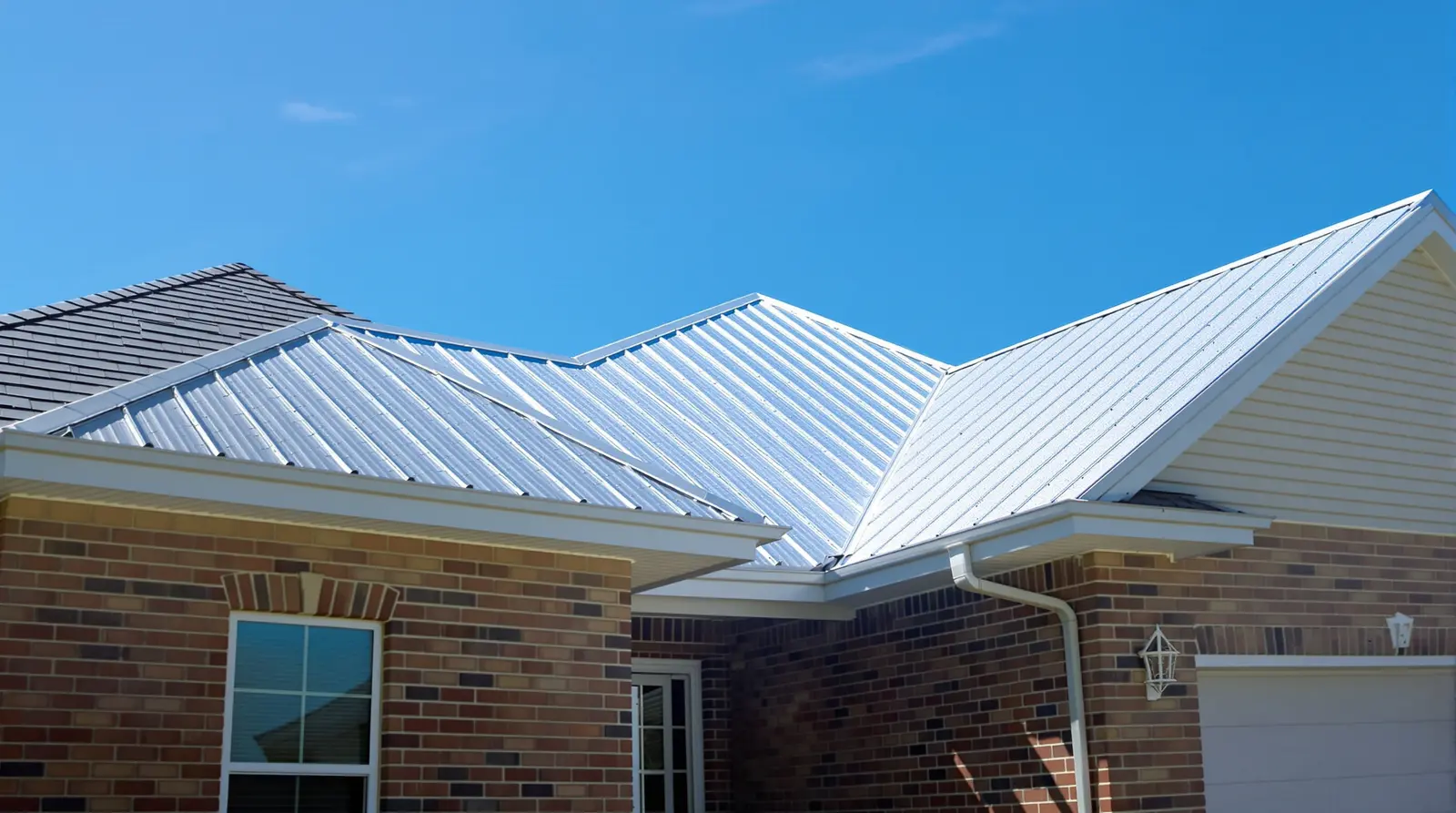
What Makes a Roof "Cool"
A cool roof is defined by two measurable properties: solar reflectance and thermal emittance. Solar reflectance measures how much sunlight bounces off the surface (0 to 1.0 scale). Thermal emittance measures how efficiently the surface radiates absorbed heat back out (also 0 to 1.0). Together, these determine the Solar Reflectance Index (SRI) — the standard comparison metric.
SRI scores range from 0 (absorbs everything) to 100+ (reflects nearly everything). A standard dark asphalt shingle has an SRI of 5-15. A cool-rated shingle scores 25-35. A white metal roof or reflective coating can reach 80-95. The higher the SRI, the cooler the roof surface stays.
The temperature difference is measurable and significant. On a 95°F Gulf Coast summer afternoon, a dark shingle roof (SRI 8) reaches 155-170°F at the surface. A cool-rated shingle (SRI 29) stays around 130-145°F. A white metal roof (SRI 82) sits at 105-120°F. That 50-65°F difference at the surface translates directly into how hot your attic gets.
ENERGY STAR and CRRC (Cool Roof Rating Council) certify products that meet minimum reflectance thresholds. For steep-slope roofs (most residential), ENERGY STAR requires an initial solar reflectance of 0.25 or higher. The CRRC directory at coolroofs.org lists rated values for thousands of products from every major manufacturer.
Solar reflectance (also called albedo) is the fraction of solar energy reflected by the surface. Fresh white paint has a reflectance around 0.80. Aged dark asphalt shingles drop to 0.05-0.10. Most roofing materials lose 5-15% of their initial reflectance over the first 1-3 years as dirt and weathering accumulate, then stabilize.
Thermal emittance measures how well a surface radiates heat as infrared energy. Most non-metallic roofing materials (shingles, tile, coatings) have high emittance (0.85-0.95), meaning they radiate absorbed heat efficiently. Bare metal roofs have low emittance (0.10-0.25), which is why unpainted metal stays hotter than you might expect despite being reflective. Painted or coated metal has emittance above 0.80.
SRI combines both properties into a single number using ASTM E1980. An SRI of 100 corresponds to a standard white surface. An SRI of 0 corresponds to a standard black surface. Some highly reflective white coatings exceed 100.
Think about it...
A homeowner asks: 'My neighbor has a light gray metal roof and says his attic is 20°F cooler than mine. I have dark charcoal shingles. Is the color difference alone enough to explain that?' What would you tell them?
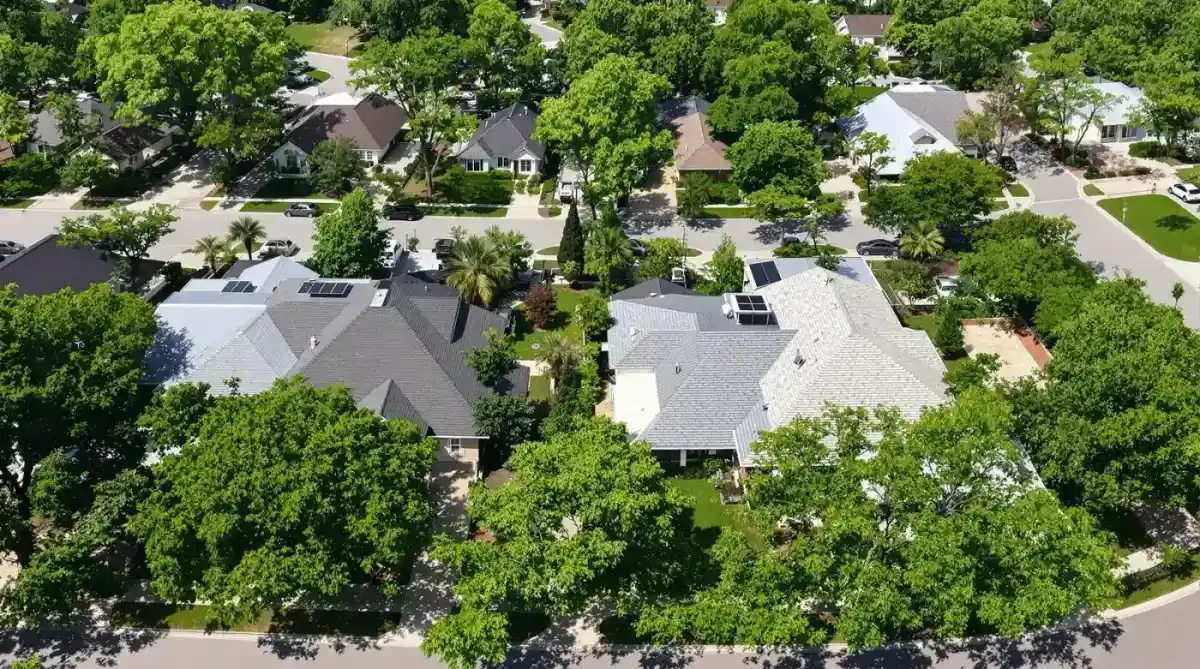
The Four Types of Cool Roofing
Cool-Rated Asphalt Shingles
Cool-rated shingles use specially engineered granules that reflect more infrared solar energy. They look like standard shingles — you cannot tell the difference visually. Every major manufacturer (GAF, CertainTeed, Owens Corning, Atlas) offers ENERGY STAR-rated lines. Initial solar reflectance ranges from 0.25-0.40, compared to 0.05-0.15 for standard dark shingles.
Surface temperature reduction is real but moderate. On a 95°F day, cool-rated shingles reach 130-145°F compared to 155-170°F for standard dark shingles — a 20-30°F difference. That translates to roughly 8-15°F cooler in the attic. FSEC research measured 5-12% cooling energy savings in Florida homes. Use the cool roof savings estimator to model the impact for your specific home.
The cost premium is small. Cool-rated shingles cost more than standard shingles — roughly $200-500 on a typical 2,000 sq ft roof. Payback in Gulf Coast climates: 2-4 years through energy savings alone.
Best for: homeowners who want traditional shingle appearance with measurable improvement. Cool-rated shingles are the easiest upgrade for anyone planning a reroof. The performance gap between cool shingles and reflective metal is significant, but cool shingles beat standard dark shingles by a meaningful margin. Our detailed cool-rated shingle comparison covers every major manufacturer's offerings.
Reflective Metal Roofing
Light-colored or "cool-pigmented" metal roofs deliver the highest thermal performance of any residential roofing. A white or light-colored standing seam metal roof reaches only 105-120°F on a 95°F day — 50-65°F cooler than dark asphalt shingles. SRI values range from 50-60 for medium colors to 80-95 for white or silver finishes with high-emittance coatings.
Metal roofing lasts 40-60 years with minimal maintenance. Compared to asphalt shingles (15-25 year lifespan), metal's lifecycle cost is often competitive despite higher upfront pricing of . Energy savings compound over decades.
Gulf Coast consideration: wind rating matters as much as thermal performance. Metal roofing rated for 140+ mph wind zones is standard for coastal Mississippi, Alabama, and the Florida Panhandle. For detailed metal roofing thermal data, see Gulf Coast Metal Roof Guide — Energy Performance. For a side-by-side temperature comparison with shingles, see Shingles vs Metal: Which Is Cooler.
Reflective Roof Coatings
Elastomeric and acrylic roof coatings add a reflective layer to existing roofs. White coatings achieve solar reflectance of 0.70-0.85, bringing even an old dark roof close to metal-roof thermal performance. They work on flat, low-slope, and metal substrates. Application on steep-slope shingles is possible but less common.
Coatings cost significantly less than a full reroof. Professional application runs , making them attractive for homeowners whose roof structure is sound but who want better thermal performance without replacement.
Lifespan and recoating requirements matter. Most coatings need reapplication every 5-10 years. Factor in total lifecycle cost when comparing to a cool-rated reroof that lasts 20+ years. For detailed coating product assessments, see Can This Roof Be Saved — Cool Roof Coatings. For our overview, see Reflective Roof Coatings.
Clay and Concrete Tile
Light-colored clay and concrete tiles achieve excellent thermal performance with SRI values of 50-75. Terra cotta and light-colored tiles naturally reflect more solar energy than dark shingles. Their thermal mass also slows heat transfer — tile roofs heat up and cool down more slowly than shingles or metal, which can delay peak attic temperatures by 2-3 hours.
Tile is heavy and requires structural reinforcement. At 9-12 lbs/sq ft (compared to 2-3.5 lbs/sq ft for shingles), most Gulf Coast homes require roof structure upgrades to support tile. This adds to the project beyond the already-higher tile cost of $10-18/sq ft installed.
Tile is rare in Gulf Coast residential for practical reasons. Wind resistance, weight, and cost limit tile adoption in south Mississippi, Alabama, and the Florida Panhandle. Metal and cool-rated shingles dominate the market. Tile is worth considering for new construction where the structure can be designed for the load.
Cool Roof Comparison: Temperature and Cost Data
This table compares measured performance across cool roof types. Surface temperatures are based on FSEC and DOE field measurements on 95°F days with direct solar exposure. Costs reflect 2025-2026 Gulf Coast installed pricing.
| Roof Type | SRI Range | Surface Temp (95°F day) | Attic Temp Reduction* | Installed Cost/sq ft | Lifespan | Cooling Savings |
|---|---|---|---|---|---|---|
| Standard dark shingles | 5-15 | 155-170°F | Baseline | $3.50-5.50 | 15-25 yrs | Baseline |
| Cool-rated shingles | 25-35 | 130-145°F | 8-15°F | $3.75-5.75 | 15-25 yrs | 5-12% |
| Reflective coating (white) | 70-95 | 105-120°F | 20-35°F | $1.50-3.50 | 5-10 yrs | 15-25% |
| Light metal (white/silver) | 80-95 | 105-120°F | 20-40°F | $8-14 | 40-60 yrs | 15-25% |
| Medium metal (tan/gray) | 50-65 | 120-135°F | 15-25°F | $8-14 | 40-60 yrs | 10-18% |
| Light clay/concrete tile | 50-75 | 115-135°F | 15-30°F | $10-18 | 50-100 yrs | 12-22% |
*Attic temperature reduction compared to standard dark shingles, assuming identical insulation and ventilation. Actual results depend on insulation R-value, ventilation adequacy, and duct location.
Before & After: Improvement Comparison
Select an improvement to see estimated temperature and cost impact.
Before
Roof Surface Temp
165°F
Peak Attic Temp
150°F
Estimated Monthly Cooling Cost
$280/mo
Baseline
Dark asphalt shingles, R-19 insulation, standard ducts
After
Roof Surface Temp
135°F
Peak Attic Temp
130°F
Estimated Monthly Cooling Savings
$25-35/mo
Investment & Payback
$200-500 premium • 2-4 year payback
What a Cool Roof Can and Cannot Do
A cool roof reduces heat gain through the roof deck by 20-40%, but it does not fix every comfort problem. If your ductwork runs through a 140°F attic, a cool roof brings that attic to 110-120°F — which is better, but your ducts are still losing capacity in a hot space. If your insulation is thin or missing, heat conducts through the ceiling regardless of roof surface temperature.
The roof is one part of a system that includes insulation, ventilation, ductwork, and HVAC. A cool roof delivers the most benefit when the rest of the system is functioning. If you have R-38 insulation, sealed ducts, and balanced ventilation, a cool roof adds the finishing layer. If you have R-11 insulation, leaking ducts, and blocked soffit vents, fixing those issues first delivers more savings per dollar. Pairing a cool roof with a radiant barrier in the attic amplifies the heat reduction at the ceiling level.
Common misconception:
A cool roof will solve my hot upstairs problem by itself.
Gulf Coast reality:
A cool roof reduces heat gain by 20-40%, but if the primary cause is leaky ductwork in the attic (the most common cause of a hot upstairs on the Gulf Coast), the cool roof addresses only part of the problem. The cause finder tool helps you identify which factors contribute most to your specific situation.
Use the cause finder to identify your priorities before investing in any single improvement. The Hot Upstairs Cause Finder helps you rank the factors contributing to your comfort problem. A cool roof may be the right first step, or it may be the second or third priority. The Cool Roof Savings Estimator can model the impact for your specific situation.
Think about it...
A homeowner has a 15-year-old dark shingle roof, R-13 insulation in the attic floor, and ducts running through the attic with torn insulation wrap. They want to install a white metal roof. Should this be their first investment?
Gulf Coast Considerations
Hot-humid climates get more benefit from cool roofs than moderate climates. With 2,500-3,000+ cooling degree days per year along the Gulf Coast (compared to 1,000-1,500 in the Mid-Atlantic), the annual cooling savings from a cool roof are proportionally larger. DOE estimates that cool roof savings are 2-3x greater in Climate Zones 2-3 (Gulf Coast) than in Zone 4-5 (mid-latitude).
The "heating penalty" barely applies here. In cold climates, a cool roof reflects useful winter solar heat, increasing heating costs. On the Gulf Coast, heating loads are minimal — most homes use less than $200-400/year in heating energy. The cooling savings of $150-400/year from a cool roof far outweigh any marginal heating penalty of $20-50/year.
Hurricane-rated products are non-negotiable in coastal counties. Any cool roofing product in south Mississippi, south Alabama, or the Florida Panhandle needs to meet local wind speed requirements (130-150 mph in many coastal zones). This limits some options — not every reflective coating or tile system carries the required wind ratings. Standing seam metal and architectural shingles with enhanced nailing patterns are the most common cool roof choices in high-wind zones.
Algae resistance matters more here than in dry climates. The Gulf Coast's humidity promotes algae growth that darkens roof surfaces over time, reducing reflectance. Cool-rated shingles with copper or zinc granules resist algae better. Metal roofs are largely immune to algae. Coatings may need cleaning or reapplication sooner in high-humidity environments.
How to Choose the Right Cool Roof
Start with your timeline and budget. If you are planning a reroof in the next 1-2 years, upgrading to cool-rated materials costs little extra. If your current roof has 10+ years of life remaining, a reflective coating can bridge the gap. If you are building new, metal or tile offer the best long-term thermal performance.
Match the investment to your home's weak points. The Energy Improvement Priority Ranker compares the cost-effectiveness of a cool roof against insulation upgrades, duct sealing, and other improvements for your specific home. Sometimes a cool roof ranks first. Sometimes it ranks third or fourth. The honest answer depends on your starting conditions.
Consider lifecycle cost, not just upfront price. Metal roofing at $8-14/sq ft lasts 40-60 years. Shingles at $3.50-5.75/sq ft last 15-25 years. Over 50 years, you may pay for 2-3 shingle roofs vs one metal roof. When you factor in the ongoing energy savings from higher SRI, the lifecycle math often favors reflective metal — especially for homeowners who plan to stay in the home long-term.
Planning a reroof? Make it a comfort upgrade too. Adding a radiant barrier, upgrading ventilation, and choosing cool-rated materials during a reroof adds minimal marginal cost compared to doing each improvement separately. See Reroof for Comfort for the complete optimization checklist.
Frequently Asked Questions
What is a cool roof?
A cool roof reflects more sunlight and absorbs less heat than a standard roof. Cool roofs are measured by Solar Reflectance Index (SRI), which combines reflectivity and thermal emittance into a single 0-100+ score. A standard dark asphalt shingle has an SRI of 5-15. A cool-rated shingle scores 25-35, and a white metal or coated roof can reach 80-95.
How much cooler does a cool roof make the attic?
A cool roof typically reduces peak attic temperatures by 20-40°F compared to a standard dark roof. On a 95°F Gulf Coast day, a dark shingle roof reaches 155-170°F at the surface, while a cool-rated metal roof stays around 105-120°F. That surface temperature difference translates to meaningful attic temperature reduction.
Will a cool roof lower my energy bill?
FSEC research shows cool roofs can reduce cooling costs by 10-25% depending on home construction, insulation levels, and duct location. Homes with ductwork in the attic see the largest savings because cooler attic air means less heat gain into the ducts. Homes with well-insulated attics and ducts inside conditioned space see smaller percentage savings.
Do cool-rated shingles really work?
Cool-rated asphalt shingles reflect 25-40% of solar energy compared to 5-15% for standard dark shingles. They reduce roof surface temperatures by 20-40°F. The effect is real and measurable, but the improvement is smaller than switching to a reflective metal or white-coated roof. Cool shingles are a meaningful step up from standard dark shingles without changing your home's appearance dramatically.
Is a cool roof worth the extra cost?
Cool-rated shingles cost $0.10-0.25 more per square foot than standard shingles — about $200-500 more on a typical 2,000 sq ft roof. That premium typically pays for itself in 2-4 years through energy savings in Gulf Coast climates. Reflective metal roofing costs significantly more upfront ($8-14/sq ft vs $3.50-5.50 for shingles) but lasts 40-60 years vs 15-25 years.
Does roof color really matter that much?
Roof color is the single biggest factor in how much solar heat your roof absorbs. A dark charcoal shingle absorbs 90-95% of solar energy and reaches 155-170°F. A light tan shingle absorbs 70-80% and reaches 130-150°F. A white or silver metal roof absorbs only 20-35% and stays at 105-120°F. That is a 50-65°F surface temperature difference between the worst and best options.
What to do next
Quick recap
Cool roofs reduce heat gain by 20-40% through higher solar reflectance. Cool-rated shingles, reflective metal, coatings, and tile each offer measurable improvement over standard dark shingles, with different cost-performance tradeoffs.
Your next step
Take the Hot Upstairs Cause Finder to see whether a cool roof is the highest-priority improvement for your specific home — or whether ductwork or insulation should come first.