Your roof absorbs more solar energy than any other part of your home. On a 95°F Gulf Coast summer day, a dark shingle roof reaches 155-170°F — and that heat moves through the roof deck, into the attic, through the insulation, and into your living space. Understanding this pathway is the first step toward a cooler, more efficient home.
After reading this page, you'll understand how your roof system drives indoor temperature, which factors matter most, and where to focus your improvement efforts.
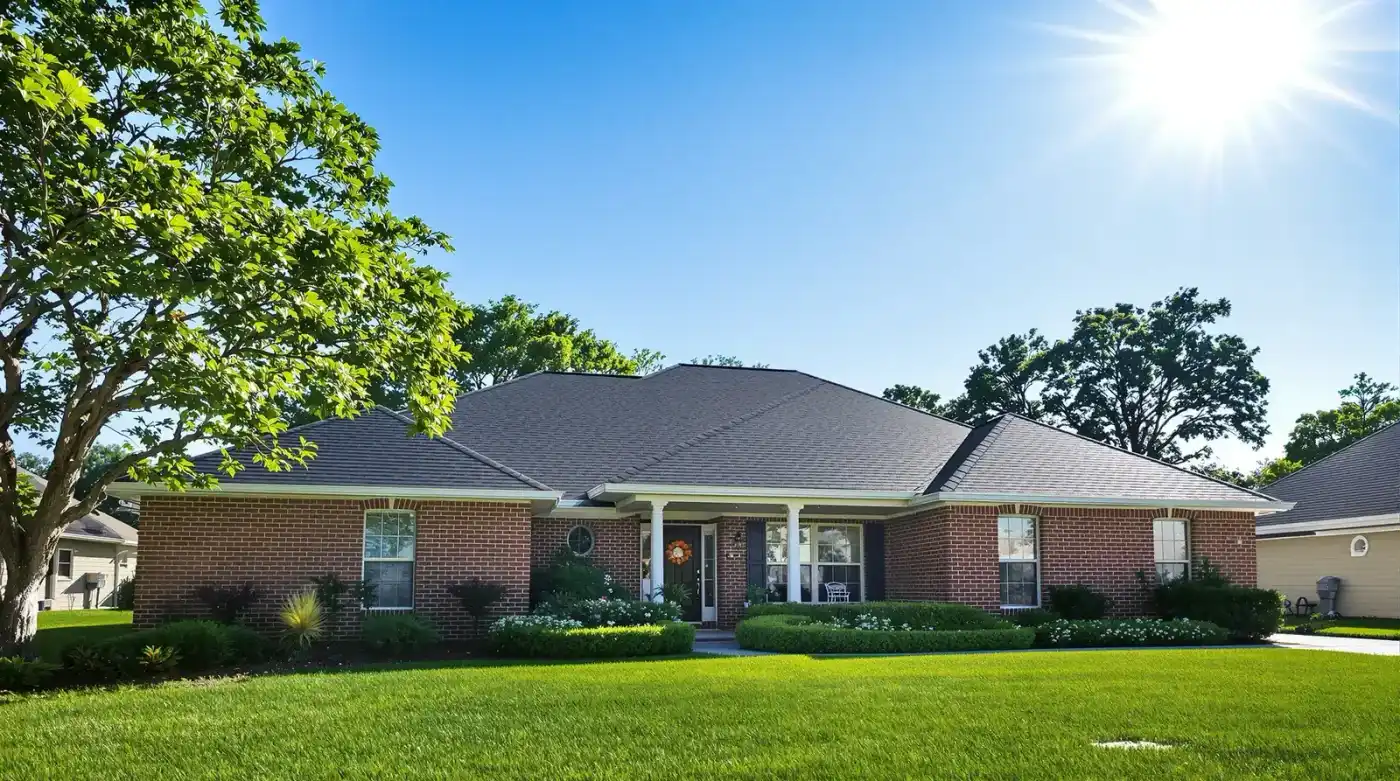
The Roof Is Your First Line of Defense
Every square foot of your roof is a solar collector. On a clear July afternoon along the Gulf Coast, the sun delivers roughly 250-300 BTUs of energy per square foot per hour to your roof surface. A typical 2,000-square-foot roof absorbs enough thermal energy every hour to heat 50 gallons of water from tap temperature to boiling. That energy has to go somewhere, and without intervention, it goes straight down into your home.
The roof-to-living-space heat chain has four links. Solar radiation hits the roof surface and is either reflected or absorbed. Absorbed energy heats the roof deck, which radiates heat into the attic space. Hot attic air surrounds your ductwork and presses against your insulation. The ceiling below warms, and your rooms heat up. Each link in this chain represents an opportunity to interrupt the flow.
Gulf Coast homes face a longer and more intense heat season than most of the country. From May through October, your roof is under sustained solar assault for six or more months. Peak attic temperatures of 140-160°F are routine, not extreme. That extended duration means even small improvements in thermal performance compound into significant comfort and energy differences over a full cooling season.
The good news is that you have multiple intervention points. You can reflect more heat at the surface (cool roof materials), block radiation in the attic (radiant barriers), resist heat flow at the ceiling (insulation), protect your ductwork (duct insulation and sealing), and manage attic air temperature (ventilation). This section of the site covers each one, with specific data and practical steps.
How Heat Moves Through the Roof System
Heat enters your home from the roof through four distinct pathways. Conduction moves heat through the solid roof deck. Radiation transfers energy from the hot deck surface to everything below it — insulation, ductwork, and attic floor. Convection circulates hot air throughout the attic space. And duct heat absorption steals cooling capacity from your air conditioning before it ever reaches your rooms.
Radiation is the dominant pathway in a hot attic, not convection. Most homeowners assume the hot air in the attic is the main problem. In reality, the underside of a 160°F roof deck radiates infrared energy downward like a broiler element. This radiant energy heats the top surface of insulation, ductwork, and anything else in the attic regardless of air temperature. Radiant barriers work because they interrupt this specific pathway. Our guide to how heat enters your home from the roof explains all four pathways in detail.
The ductwork pathway is often the most expensive one to ignore. When supply ducts run through a 140°F attic, the 55°F air inside those ducts gains 15-25°F before reaching your registers. Your air conditioner works harder, runs longer, and still cannot keep up. In many Gulf Coast homes, ductwork losses account for 20-40% of total cooling inefficiency.
Understanding all four pathways matters because no single fix addresses all of them. A cool roof reduces the starting temperature but does not fix leaky ducts. Insulation resists conduction but does not stop radiation. Ventilation lowers air temperature but cannot compensate for a 160°F radiant surface above unprotected ductwork. The most effective strategy targets the weakest link in your specific home.
Read the full guide to all four heat pathways →Think about it...
If a homeowner adds more attic ventilation but still has uninsulated ducts running through a 140°F attic, will they notice a significant comfort improvement?
The Impact of Roof Color
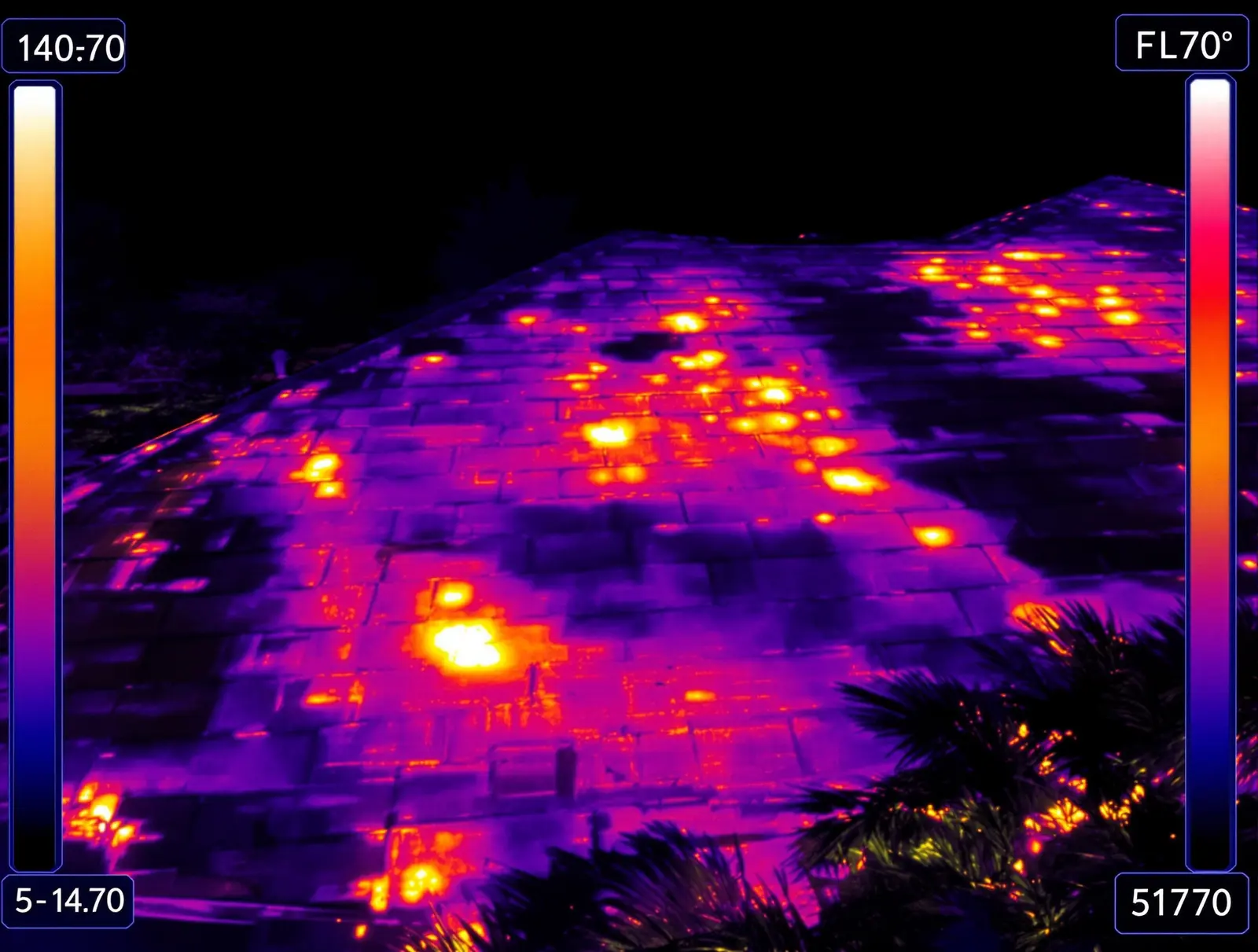
Dark roofs absorb 85-95% of solar energy, while light roofs reflect 25-65% of it. This is not a subtle difference. On a 95°F day, a standard dark asphalt shingle roof reaches 155-170°F at the surface. A light-colored metal roof under identical conditions reaches 105-120°F. That 50-65°F gap at the surface translates to a 20-40°F difference in peak attic temperature.
Solar Reflectance Index (SRI) is the standard measure of a roof's ability to reject solar heat. SRI combines two properties: solar reflectance (how much sunlight bounces off) and thermal emittance (how efficiently the surface releases absorbed heat). An SRI of 0 represents a standard black surface. An SRI of 100 represents a standard white surface. Most dark shingles score 5-15. Light-colored metal panels score 50-80.
The color difference matters most when insulation is thin. If your attic already has R-38 insulation in good condition, a cooler roof surface still helps, but the improvement is more modest. If your home has R-11 or R-19 insulation — common in older Gulf Coast homes — the roof color has a direct and measurable effect on ceiling temperature and indoor comfort. Homes with ductwork in the attic see the largest benefit from a cooler roof surface.
You do not need a white roof to get meaningful results. Modern cool-rated shingles in medium tones reflect 25-40% of solar energy, compared to 5-15% for a standard dark shingle. The difference between a standard dark shingle and a cool-rated medium-tone shingle is often larger than the difference between a cool-rated medium shingle and a white metal roof. See the measurable impact of roof color for specific SRI comparisons and temperature data.
See the full roof color and temperature comparison →Roofing Materials and Thermal Performance
Different roofing materials behave very differently under the same sun. Material type determines not just surface temperature but how quickly heat conducts through to the deck, how much thermal mass stores heat into the evening hours, and whether an air gap exists between the surface and the deck. These factors combine to produce dramatically different attic conditions.
Metal roofing runs 20-60°F cooler than asphalt shingles in the same color. A medium-gray standing seam metal roof reaches approximately 130-140°F on a 95°F day, while the same gray in asphalt shingles reaches 150-160°F. Metal's higher thermal emittance means it releases absorbed heat faster. And when metal is installed over battens with an air gap, the ventilated gap provides an additional 10-15°F reduction at the deck level.
Concrete and clay tile roofing benefits from thermal mass and air gaps. Tile does reach high surface temperatures — 140-165°F for dark tile — but the air space beneath the tile and the thermal mass delay heat transfer by 8-12 hours. This means peak heat arrives at the attic floor in the evening, when outdoor temperatures are already dropping, rather than at 2 PM when cooling demand is highest.
Asphalt shingles are the most common and the worst thermal performers. Dark asphalt shingles absorb 85-95% of solar radiation, reach the highest surface temperatures, and have thin profiles that transfer heat rapidly to the deck. Cool-rated asphalt shingles improve reflectance by 15-30 percentage points, which helps but does not match metal or tile performance. For homeowners not planning a reroof, attic-side improvements (insulation, radiant barrier, duct sealing) can compensate significantly.
See all roofing materials ranked by thermal performance →Common misconception:
A new roof is always the most cost-effective way to reduce heat gain from above.
Gulf Coast reality:
In many Gulf Coast homes, adding insulation from R-11 to R-38 or sealing leaky ductwork delivers 2-4 times more comfort improvement per dollar than a new cool roof. The right answer depends on your current insulation level, duct condition, and roof condition. Start with a diagnostic, not a roofing quote.
Explore Roof and Heat Topics
This section covers every aspect of how your roof affects your home's temperature. Each page goes deep on a specific topic with measurable data, practical diagnostic steps, and honest assessments. Start with whatever matches your situation.
The Four Pathways Heat Enters
Conduction, radiation, convection, and duct absorption — how each one works and which matters most in your home.
Concept page →Roof Color and Temperature
The measurable difference between dark and light roofs, SRI explained, and what the numbers actually mean for your home.
Concept page →Roof Surface Temperature
What your roof actually reaches by material and color, with real-world temperature data from Gulf Coast conditions.
Concept page →How Heat Enters Your Home
Four distinct pathways from roof to living space. Understanding them helps you target the right fix.
Concept page →Measure It Yourself
A step-by-step guide to measuring your roof's heat impact with a $20 infrared thermometer. Real numbers, not guesses.
Tutorial →Material Comparison
Asphalt, metal, tile, and cool-rated options ranked by thermal performance with specific temperature data.
Comparison →Shingles vs Metal: Which Is Cooler?
A direct thermal comparison between asphalt shingles and metal roofing, with real temperature differences.
Comparison →Heat Gain Estimator Tool
Enter your roof type, color, and square footage to estimate surface temperature, attic temperature, and BTU heat gain.
Interactive tool →Start With a Diagnosis, Not a Product
The most common mistake homeowners make is jumping to a solution before understanding the problem. A dark roof contributes to a hot house — but so does thin insulation, leaky ductwork, blocked soffit vents, and an oversized or undersized HVAC system. The roof might be the primary driver of your comfort problem, or it might be a secondary factor behind a more impactful issue.
Our cause finder tool identifies the most likely source of your specific comfort problem. It walks through ten diagnostic questions and ranks the probable causes in order. If the roof is the top factor, you will know exactly what to look at next. If ductwork or insulation is the bigger issue, you will know that too — and you will save money by fixing the right thing first.
Understanding your roof's thermal contribution is valuable even if the roof is not the primary problem. You can measure your roof's heat impact with a $20 thermometer to establish your baseline — knowing that your dark shingle roof reaches 165°F and your attic peaks at 145°F gives you a starting point. When you combine that with insulation depth, duct condition, and ventilation measurements, you can see exactly where your home's thermal performance breaks down and where each dollar of improvement will have the greatest effect.
Think about it...
A homeowner has R-11 attic insulation and uninsulated ducts running through a 145°F attic. They're considering a cool roof to fix their hot upstairs. Is this the best first step?
The Gulf Coast Difference
Standard building science advice often does not apply in hot-humid climates. Most insulation and ventilation guidance is written for cold-climate homes where the goal is keeping heat inside. On the Gulf Coast, the primary thermal challenge is keeping heat out — and the humidity complicates every strategy. Ventilation that works perfectly in Minnesota can introduce moisture problems in Mississippi.
Your roof carries a heavier thermal burden here than in most of the country. Gulf Coast homes experience 2,500-3,500 cooling degree days per year, compared to 500-1,500 in northern states. The cooling season runs six to seven months. Peak solar radiation is higher, ambient humidity is higher, and nighttime temperatures stay above 75°F for months at a time. All of this means the roof's thermal performance has a larger impact on comfort and energy costs than it does in cooler climates.
Humidity changes the rules for attic ventilation. In dry climates, more ventilation is generally better — it lowers attic temperature with minimal side effects. On the Gulf Coast, bringing humid outdoor air into the attic during certain conditions can cause condensation on cool surfaces (like air conditioning ducts). The right ventilation strategy depends on your insulation type, duct location, and whether you have a vapor barrier. These nuances matter.
The best approach for Gulf Coast homes combines multiple strategies. A single-improvement approach rarely solves the problem. The most effective homes combine a reasonably reflective roof surface, adequate insulation (R-30 minimum, R-38 preferred), sealed and insulated ductwork, balanced ventilation, and proper air sealing. Each element handles a different part of the heat and moisture challenge.
Common misconception:
More attic ventilation is always better — it cools the attic and reduces your energy bills.
Gulf Coast reality:
On the Gulf Coast, excessive ventilation can introduce humid outdoor air that condenses on cold duct surfaces, causing moisture problems and potential mold. The goal is balanced ventilation with the right amount for your specific attic configuration, not maximum airflow.
What You Can Do Today
Start with a temperature measurement. Grab a infrared thermometer and measure your roof surface, attic air, ceiling surface, and supply register temperatures on a sunny afternoon. Our step-by-step measurement guide shows you exactly how to do this and what your numbers mean.
Check your attic insulation depth. Go into the attic with a tape measure and check insulation thickness in three or four spots. On the Gulf Coast, you want at least 10 inches of fiberglass batts (R-30) or 13 inches (R-38). If you can see the tops of ceiling joists, your insulation is too thin — and it is a larger contributor to your comfort problem than roof color.
Look at your ductwork. While you are in the attic, check the condition of your ductwork. Look for disconnected joints, torn insulation wrap, crushed sections, or visible gaps where ducts meet registers. Ductwork problems are the most common single cause of a hot upstairs in Gulf Coast homes, and they are often fixable without replacing anything on the roof.
Use the cause finder to put your observations into context. After you have taken some measurements and inspected your attic, run through our cause finder diagnostic. It will combine your observations with the most common patterns we see in Gulf Coast homes and give you a ranked list of probable causes with specific next steps for each one.
Frequently Asked Questions
How hot does a roof actually get in Gulf Coast summers?
A dark asphalt shingle roof reaches 155-170°F on a 95°F day. Light-colored metal roofing stays 50-65°F cooler, reaching 105-120°F under the same conditions. The roof surface temperature depends on solar reflectance, thermal emittance, and wind speed.
Does roof color really affect my energy bill?
Yes. Studies by the Florida Solar Energy Center show that switching from a dark to a reflective roof can reduce cooling energy by 10-25%, depending on insulation levels, ductwork location, and attic design. The impact is greatest in homes with poor insulation or ductwork in the attic.
Can my roof make my upstairs hotter than my downstairs?
Absolutely. The roof heats the attic, which heats the ceiling below. In a two-story home, the upstairs ceiling is directly below the attic. If insulation is thin or missing, the ceiling surface can reach 85-90°F, radiating heat into the rooms below.
Is a new roof the best way to fix a hot house?
Not always. If your ductwork runs through a 140°F attic or your insulation is only R-11, fixing those problems will typically deliver more comfort improvement per dollar than a new roof. The right answer depends on your specific situation — use our cause finder tool to identify what matters most.
What is a cool roof?
A cool roof is any roofing system that reflects more sunlight and absorbs less heat than a standard roof. This includes light-colored metal, cool-rated asphalt shingles, tile, and reflective coatings. Cool roofs are measured by Solar Reflectance Index (SRI), with higher numbers indicating better performance.
Do I need to replace my roof to reduce heat gain?
Not necessarily. Improving attic insulation, sealing ductwork, or adding a radiant barrier can reduce the impact of roof heat without replacing the roof itself. If you are planning a reroof anyway, choosing a cooler material is an excellent opportunity to improve comfort at minimal additional cost.
What to do next
Quick recap
Your roof is the largest solar collector on your home, and its color, material, and condition directly affect attic temperature and indoor comfort. But the roof is just one link in a chain that includes insulation, ductwork, ventilation, and air sealing.
Your next step
Measure your roof's heat impact yourself with a $15-25 infrared thermometer — or take the cause finder diagnostic to identify what matters most in your home.
Keep reading