Roof color is one of the most significant and most overlooked factors in home comfort. On a 95°F Gulf Coast day, a dark asphalt shingle roof reaches 155-170°F while a light-colored metal roof stays at 105-120°F. That 50-65°F difference at the surface cascades down through the attic to your living space. Solar Reflectance Index (SRI) is the standard measure, and even moderate color changes produce measurable results.
After reading this page, you'll understand exactly how roof color affects temperature, what SRI means in practical terms, and whether a color change would make a meaningful difference in your home.
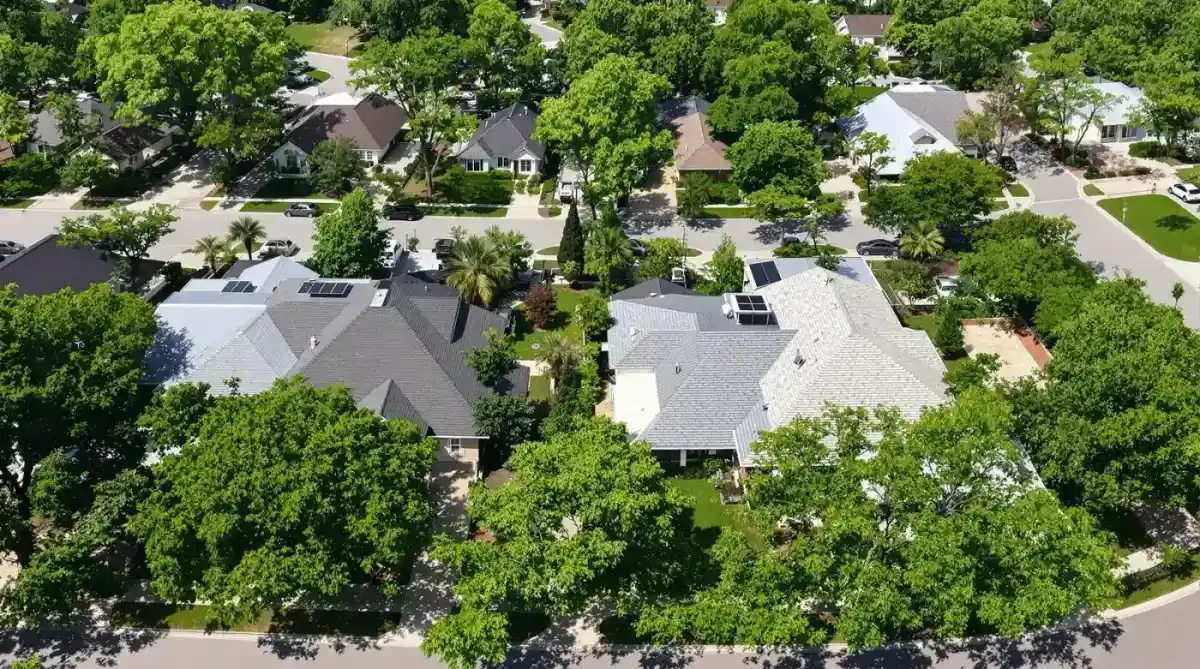
Solar Reflectance: The Physics of Color and Heat
Every roof surface either reflects or absorbs the sunlight that hits it — there is no third option. Solar reflectance is the percentage of incoming solar energy that bounces off the surface. A surface with 0.05 solar reflectance absorbs 95% of sunlight. A surface with 0.65 solar reflectance absorbs only 35%. The absorbed energy converts directly to heat, raising the surface temperature until the surface reaches thermal equilibrium with its surroundings.
Color is the primary driver of solar reflectance in roofing materials. Dark colors absorb across the full solar spectrum — visible light, near-infrared, and ultraviolet. Light colors reflect the visible spectrum but may still absorb significant near-infrared energy. Specialized "cool" pigments reflect near-infrared wavelengths (which carry approximately 50% of solar energy) even in darker colors, allowing medium-toned roofs to reflect more energy than their color alone would suggest.
Thermal emittance is the second property that determines roof temperature. Once a surface absorbs heat, emittance measures how efficiently it radiates that heat away. Most roofing materials have high thermal emittance (0.85-0.95), meaning they radiate absorbed heat reasonably well. The notable exception is bare metal, which has low emittance (0.05-0.25) unless coated with paint or a finish. Painted and coated metal products typically have emittance values of 0.80-0.90, performing like other materials in this regard.
The combination of reflectance and emittance determines the equilibrium surface temperature. Two roofs with the same color but different emittance will reach different temperatures. Two roofs with the same emittance but different colors will also reach different temperatures. Solar Reflectance Index (SRI) combines both properties into a single number that predicts relative surface temperature, making it the most useful metric for comparing roofing options.
How SRI is calculated: SRI uses a steady-state energy balance equation that accounts for solar reflectance, thermal emittance, wind speed (assumed at a moderate level), and ambient temperature. An SRI of 0 corresponds to a standard black body (reflectance 0.05, emittance 0.90). An SRI of 100 corresponds to a standard white body (reflectance 0.80, emittance 0.90). Values above 100 are possible for very high-reflectance, high-emittance surfaces. The calculation is defined in ASTM E1980. For homeowners, the takeaway is simple: higher SRI means a cooler roof surface.
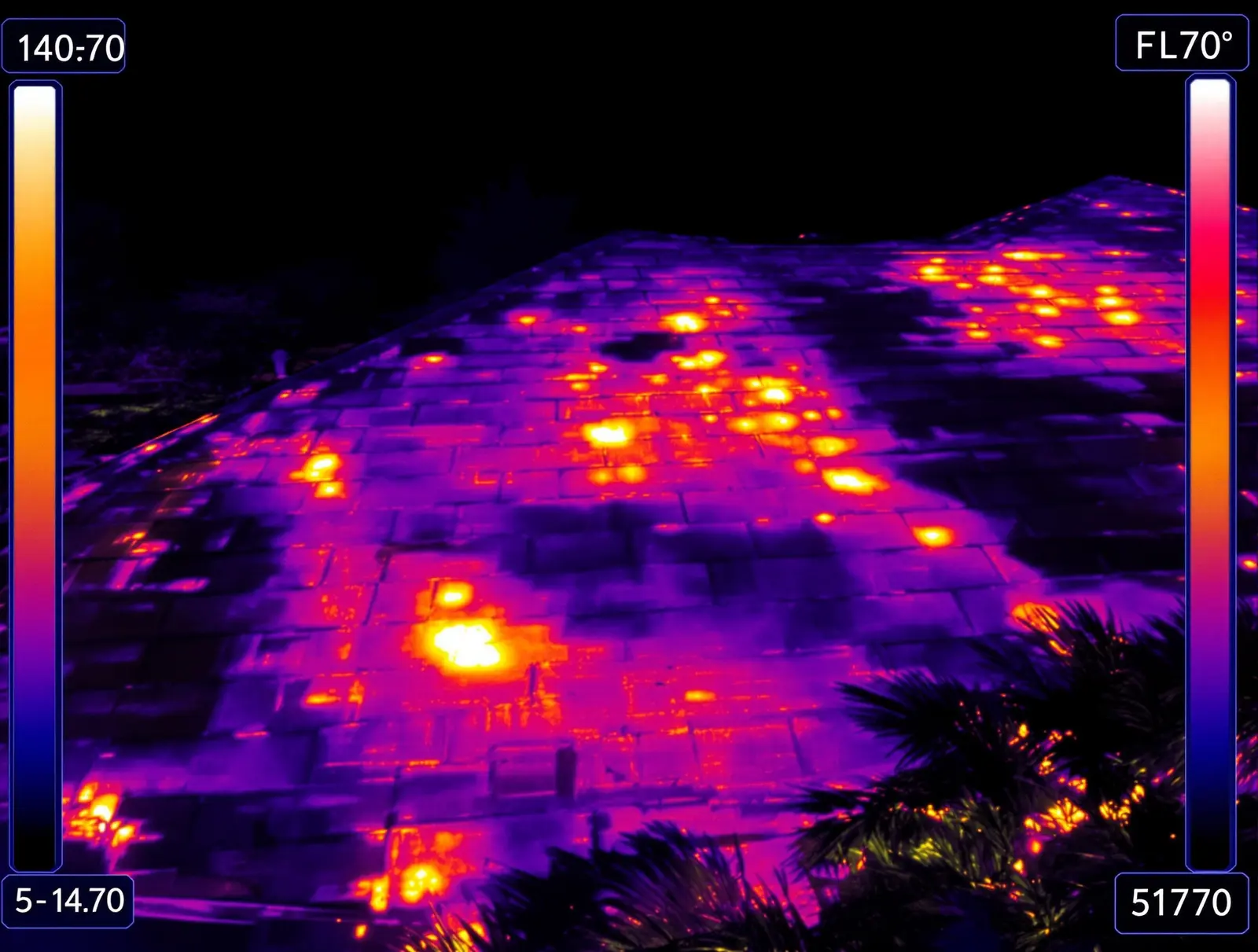
Dark vs. Light: The Temperature Comparison
The surface temperature difference between dark and light roofs is not subtle — it is dramatic. On a clear 95°F Gulf Coast afternoon with full sun exposure, field measurements consistently show the following surface temperature ranges by color category. These are not laboratory projections; they are real-world readings taken with infrared thermometers on roofs in Mississippi, Alabama, and Florida.
| Roof Material & Color | Solar Reflectance | SRI | Surface Temp (95°F day) |
|---|---|---|---|
| Dark asphalt shingles (charcoal, black) | 0.05 – 0.15 | 5 – 15 | 155 – 170°F |
| Medium asphalt shingles (brown, gray) | 0.10 – 0.20 | 10 – 22 | 145 – 160°F |
| Cool-rated asphalt shingles (medium tones) | 0.25 – 0.40 | 25 – 45 | 130 – 145°F |
| Dark metal (dark bronze, dark gray) | 0.15 – 0.25 | 15 – 30 | 140 – 155°F |
| Light metal (light gray, beige, tan) | 0.40 – 0.60 | 45 – 70 | 115 – 130°F |
| White or reflective metal | 0.55 – 0.70 | 60 – 82 | 105 – 120°F |
| Dark concrete/clay tile | 0.10 – 0.20 | 12 – 25 | 145 – 165°F |
| Light concrete/clay tile | 0.35 – 0.55 | 40 – 65 | 120 – 135°F |
The single largest temperature jump on this table is between standard dark shingles and cool-rated medium-tone shingles. That shift — from an SRI of 5-15 to an SRI of 25-45 — drops surface temperature by 15-30°F. You do not need to switch materials or go to a light color to get a meaningful improvement. Simply choosing a cool-rated shingle in a conventional color produces a measurable difference.
Going from cool-rated shingles to light metal produces another significant drop. Light-colored metal panels (SRI 45-70) run 15-25°F cooler than cool-rated asphalt shingles. If you are already planning a reroof and considering metal, the thermal advantage is real and documented. See our shingles vs. metal heat comparison for the full analysis.
Temperature Stack Visualizer
See how temperature changes at each layer from roof to living space.
Current
Think about it...
A homeowner is choosing between a standard dark gray asphalt shingle (SRI 12) and a cool-rated version of the same gray color (SRI 35). On a 95°F day, approximately how much cooler will the cool-rated shingle be at the surface?
SRI: The Number That Matters
Solar Reflectance Index is the single most useful number for comparing roofing products' thermal performance. Unlike reflectance alone (which ignores emittance) or color alone (which ignores material properties), SRI accounts for both properties and predicts the relative surface temperature under standard conditions. ENERGY STAR and most building codes reference SRI when defining cool roof requirements.
ENERGY STAR requires an initial SRI of at least 29 for steep-slope residential roofing. This is the threshold where a roof is officially considered "cool." Many dark asphalt shingles score below 15. Most standard medium-tone shingles score 15-25. You need a specifically cool-rated product or a light color to reach 29 or above. For reference, the Title 24 energy code in California requires SRI 16 or higher for all new residential roofs — Gulf Coast homes benefit even more from exceeding this threshold.
SRI values degrade over time, and the rate depends on the material. Asphalt shingles lose reflectance as they accumulate dirt, algae, and granule wear. A shingle that starts at SRI 35 may drop to SRI 20-25 within three to five years. Metal and tile maintain their initial reflectance much better, typically losing only 5-10% of SRI over their service life. When comparing products, look for both initial and aged SRI values — the aged value tells you what to expect over the long term.
You can find SRI data for specific products on the Cool Roof Rating Council (CRRC) directory. Every major roofing manufacturer lists products in this public database. Search by manufacturer and product name to find tested initial and aged solar reflectance, thermal emittance, and SRI values. This is the same data used by building codes and energy programs. If a salesperson claims a product is "cool" but it is not listed in the CRRC directory, ask for independent test data.
When Roof Color Matters Most — and When It Matters Less
Roof color has the greatest impact on homes with low insulation and ductwork in the attic. If your attic has R-11 insulation (common in pre-1990 Gulf Coast homes) and flex ducts running through 145°F air, a cooler roof surface would lower attic peak temperature by 20-30°F, which in turn reduces heat gain through the insulation and heat absorption by the ducts. In this scenario, a roof color change can reduce cooling costs by 15-25%.
Roof color has less impact when attic insulation is already thick. If you have R-38 insulation in good condition, the temperature at the ceiling surface is already well-controlled regardless of attic temperature. Dropping the attic from 145°F to 120°F with a cooler roof will still save energy, but the ceiling-level improvement is smaller — perhaps 1-3°F rather than 5-10°F. The more insulation you have, the less the roof surface temperature matters for indoor comfort.
On the Gulf Coast, the cooling season is long enough that even modest improvements compound. A roof color change that reduces cooling load by 8% does not sound dramatic. But when that 8% applies across six or seven months of cooling season and 2,500-3,500 cooling degree days, the cumulative energy savings are meaningful. Florida Solar Energy Center data shows annual cooling energy reductions of 10-25% from cool roofs, depending on the home's overall configuration.
The most cost-effective time to change roof color is during a planned reroof. Choosing a cool-rated product or lighter color during a reroof adds zero to minimal additional cost. You are buying new roofing material anyway — choosing a higher-SRI option is essentially free thermal improvement. Changing color specifically to reduce heat gain, without replacing the roof, is rarely cost-justified on its own. But if you are already planning a reroof, this is the easiest upgrade available.
Common misconception:
White roofs always save money and are the obvious choice for hot climates.
Gulf Coast reality:
A white or light-colored roof provides the maximum surface temperature reduction, but the energy savings depend on what is already in the attic. If you have R-38 insulation and sealed ducts inside conditioned space, a white roof saves relatively little because the attic heat is already well-managed. If you have R-11 insulation and leaky ducts in the attic, upgrading insulation and fixing ducts will typically deliver more savings per dollar than a color change. The best approach considers the whole system.
Think about it...
Two identical houses sit side by side. Both have R-19 insulation and ducts in the attic. House A has a dark shingle roof (SRI 10). House B has a light metal roof (SRI 65). On a 95°F day, which house has a cooler upstairs and approximately what is the attic temperature difference?
Cool Pigments: Getting Performance Without White
Cool pigment technology allows medium and dark-colored roofs to reflect significantly more solar energy than their appearance suggests. Standard dark pigments absorb broadly across the solar spectrum. Cool pigments are engineered to absorb visible light (maintaining the desired color appearance) while reflecting near-infrared radiation. Since near-infrared carries roughly 50% of solar energy, a dark roof with cool pigments can reflect 25-40% of total solar energy instead of the 5-15% typical of standard dark materials.
The visual difference between a cool-pigment shingle and a standard shingle is minimal. Side by side on the same roof, most homeowners cannot distinguish a cool-rated dark brown shingle from a standard dark brown shingle. The color appears the same to the human eye. The difference is in the near-infrared spectrum, which is invisible but carries substantial heat energy. You get thermal performance without compromising the look of your home.
Cool pigment products are widely available from major manufacturers. GAF, CertainTeed, Owens Corning, and other major shingle manufacturers offer cool-rated product lines. They are typically priced within 5-10% of standard products in the same line. When you are comparing roofing quotes for a reroof, ask specifically whether the proposed product is CRRC-rated and what its initial and aged SRI values are.
The performance gap between cool-pigment products and standard products narrows with aging. Cool pigments degrade from dirt, algae, and weathering just like standard pigments. A cool-rated shingle that starts with an SRI of 35 may perform at SRI 22-28 after five years. This is still meaningfully better than a standard dark shingle at SRI 8-12 after the same period, but the advantage is smaller than initial ratings suggest. Metal and tile with cool coatings retain their performance advantage longer due to smoother, less porous surfaces.
Frequently Asked Questions
Does roof color really make a measurable difference in home temperature?
Yes. On a 95°F day, a dark shingle roof reaches 155-170°F while a white or light-colored reflective roof reaches 105-120°F. This 50-65°F surface temperature difference translates to a 20-40°F difference in peak attic temperature. The impact on indoor comfort depends on insulation level and duct location, but it is always measurable.
What is a good SRI value for a cool roof?
For residential roofing on the Gulf Coast, an SRI of 29 or higher is considered "cool" by ENERGY STAR. Values above 50 are excellent. Standard dark shingles score 5-15. Light-colored metal panels can score 50-80. The higher the SRI, the less heat your roof absorbs and transfers to the attic.
Will a white roof look strange in my neighborhood?
You do not need a white roof to get significant heat reduction. Cool-rated shingles in medium browns and grays reflect 25-40% of solar energy compared to 5-15% for standard dark shingles. Light gray, tan, and beige metal panels score well on SRI while looking conventional. The biggest gains come from avoiding the darkest colors, not necessarily choosing white.
What to do next
Quick recap
Roof color directly affects surface temperature by 50-65°F between dark and light options. SRI is the standard measure combining reflectance and emittance. The impact on your comfort depends on insulation level and duct location. Cool-pigment technology allows medium-tone roofs to perform significantly better than standard dark products.
Your next step
Measure your own roof surface temperature with an infrared thermometer on a sunny afternoon, then compare it to the table above to see where your roof falls on the spectrum.
Keep reading