The most common causes of a hot upstairs in Gulf Coast homes are, in order: (1) ductwork running through a superheated attic, (2) inadequate attic insulation, (3) blocked soffit vents, (4) a dark heat-absorbing roof, and (5) air leaks between the attic and living space. Most of these are not roof problems. Each cause has specific DIY checks you can do in 30 minutes with a flashlight and a thermometer.
After reading this page, you will know how to identify which of the five causes is making your upstairs hot — and what kind of professional to call based on what you find.
The 5 Causes, Ranked by Probability
A hot upstairs is the most common comfort complaint in Gulf Coast two-story homes. The frustration is real: you set the thermostat to 74°F, the downstairs feels fine, and the upstairs feels like 80°F or more. The natural instinct is to blame the AC, but in most cases the air conditioning system is working correctly — the problem is heat entering the upper floor faster than the system can remove it.
The causes below are ranked by how often they are the primary contributor in Gulf Coast homes. Most hot-upstairs problems involve two or three of these causes working together. But identifying the biggest contributor lets you fix the most impactful problem first.
#1: Ductwork Running Through a Hot Attic (Most Common)
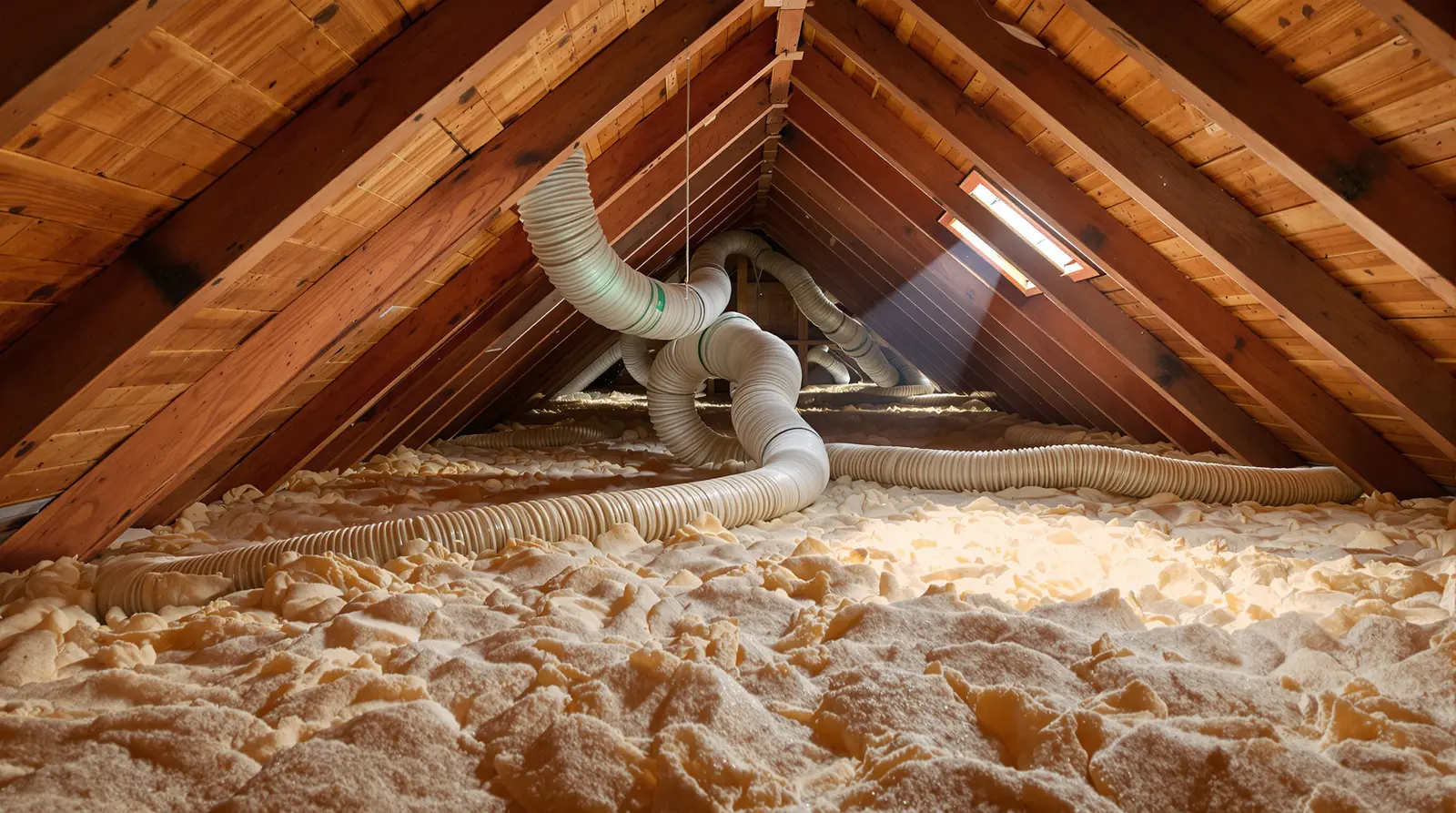
Your ductwork is the most likely reason your upstairs is hot. In Gulf Coast homes, the air handler and duct system typically sit in the attic — where temperatures reach 140-160°F in summer. Your AC cools air to about 55°F at the unit. That air then travels through 40-80 feet of ductwork before reaching second-floor supply registers. Every foot of duct sitting in 150°F heat absorbs warmth into the conditioned air.
Duct leaks compound the problem dramatically. Flex duct connections pull apart over time. Metal duct joints develop gaps. Boot connections where ducts meet the ceiling separate. Each gap dumps expensive cooled air directly into the attic and pulls hot attic air into the return side of the system. A duct system with 20% leakage loses 30-40% of its effective cooling capacity.
This is a Tier 3 diagnosis — it is not a roof problem. Duct sealing and insulation requires an HVAC contractor or duct specialist, not a roofer. The fix typically costs and pays for itself in 1-3 years.
How to check it yourself
- Measure supply air temperatures. With the AC running, hold a thermometer at each supply register upstairs and downstairs. Supply air should be 55-62°F. If upstairs registers read 65°F or warmer while downstairs registers read 58°F, the ducts serving the upstairs are losing heat in the attic.
- Check for temperature variation between registers. If one upstairs register reads 58°F and another reads 68°F, the warmer register has a longer duct run, a disconnected section, or worse insulation on that duct branch. More than 3°F variation between registers indicates a problem.
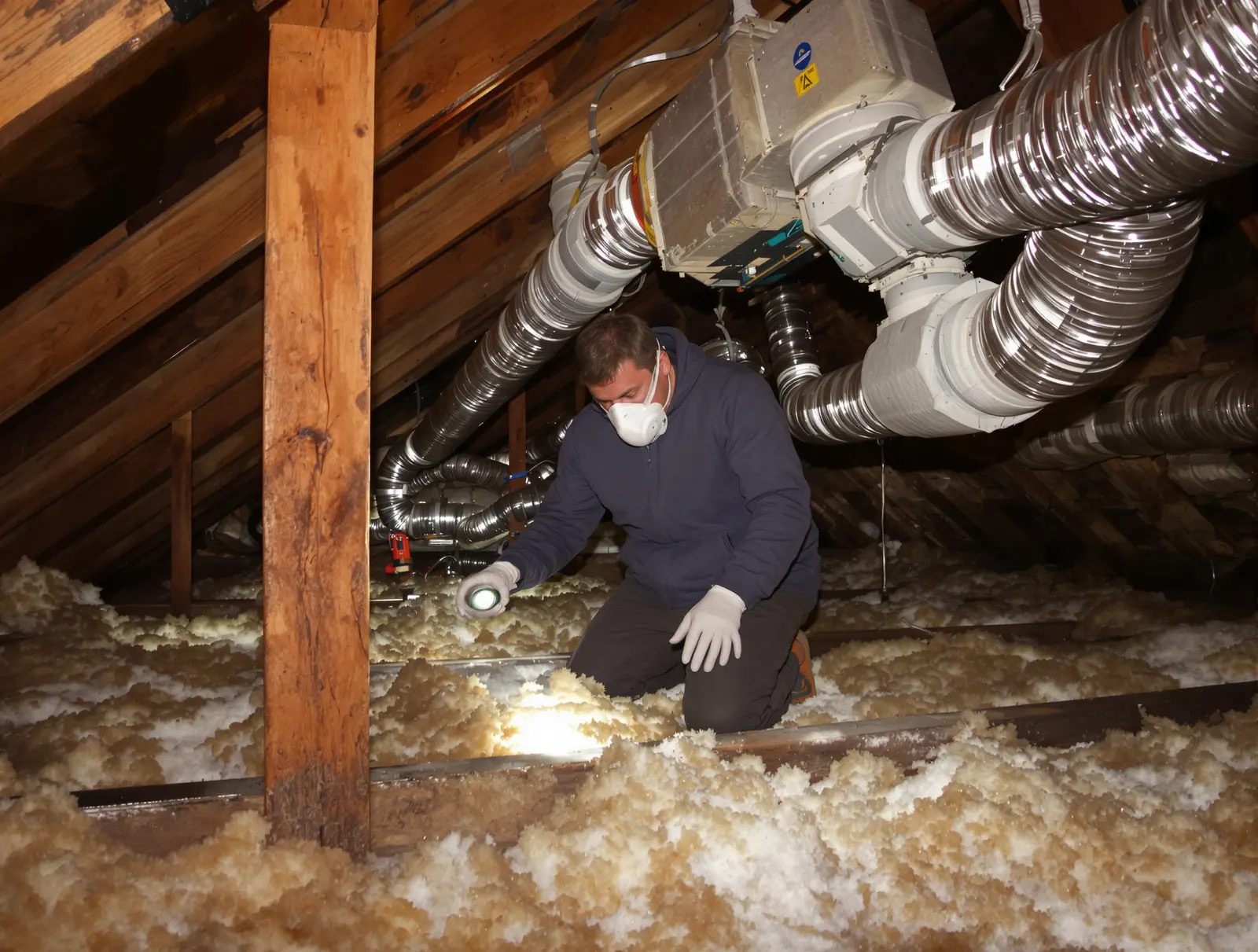
- Visually inspect the attic ductwork. Go into the attic with a flashlight. Look at flex duct connections — are they secured with zip ties and mastic, or are they loose and pulling apart? Look for torn or compressed insulation on the duct exterior. Check where ducts connect to ceiling registers (called boots) — are there visible gaps?
- Feel for air leaks. With the AC running, hold your hand near duct connections in the attic. Cool air blowing on your hand means conditioned air is escaping into the attic instead of reaching your rooms.
In a two-story home, second-floor duct runs are typically 30-50% longer than first-floor runs because the ducts must travel from the air handler, across the attic, and down to ceiling registers — often making turns and running along roof rafters. Each additional foot of duct in the attic absorbs more heat. A 60-foot duct run in a 150°F attic with R-6 flex duct insulation can warm the supply air by 10-15°F before it reaches the register.
First-floor ducts often run partially through interior walls or between floors, where they are exposed to conditioned-space temperatures (74°F) rather than attic temperatures (150°F). This is why first-floor registers often deliver cooler air even when the duct system has leaks — the thermal penalty per foot is much smaller.
#2: Inadequate Attic Insulation
The attic floor is the thermal barrier between 150°F and 74°F. If the insulation in that barrier is thin, settled, compressed, or missing in spots, heat flows through the ceiling into the rooms below. The Department of Energy recommends R-38 to R-60 for Gulf Coast attic insulation (Climate Zone 2). Many homes built before 2000 have R-11 to R-19 — less than half of what is needed.
Insulation problems disproportionately affect the upstairs. The second floor sits directly below the attic. Every square foot of inadequate insulation allows heat to radiate downward into bedrooms, hallways, and bathrooms. The first floor, separated from the attic by the second floor and its ceiling, receives much less radiant heat from the attic.
How to check it yourself
- Measure the depth. Open the attic access and use a tape measure or ruler. Blown cellulose insulation needs about 10-11 inches for R-38. Blown fiberglass needs 13-14 inches. Fiberglass batts have R-value printed on the facing. If you see less than 8 inches of blown insulation or R-19 batts, the insulation is below minimum recommendations.
- Check for gaps and thin spots. Look across the attic floor from the access hatch. Insulation should be a uniform depth with no visible ceiling drywall showing through. Common thin spots: around HVAC equipment, near the attic hatch, around plumbing and electrical penetrations, and along the eaves where the roof slope meets the attic floor.
- Check the condition. Is the insulation compressed (someone walked on it or stored items on it)? Is it discolored or damp from moisture? Wet or compressed insulation performs at a fraction of its rated R-value. Cellulose settles 10-20% in the first few years and may need topping off.
#3: Blocked Soffit Vents
Soffit vents are the intake openings at the bottom of your attic ventilation system. They allow cooler outdoor air to enter at the eaves, flow upward under the roof deck, and exit through ridge or exhaust vents at the top. When soffits are blocked, the attic has no intake air — and even if you have a ridge vent at the top, it cannot exhaust air without an intake source. The ventilation circuit breaks, and the attic becomes a sealed oven.
Blocked soffits increase peak attic temperatures by 20-40°F. A properly ventilated attic with a dark shingle roof might reach 140°F on a 95°F day. The same attic with blocked soffits can reach 160-180°F. That extra 20-40°F increases heat transfer through the ceiling and raises duct losses proportionally.
How to check it yourself
- From inside the attic: With a flashlight, move toward the eaves where the roof slope meets the exterior wall. Can you see daylight coming through the soffit vent openings? If insulation has been pushed up against the soffit area and you see no light, the vents are blocked. Insulation baffles (cardboard or foam channels) should keep a clear air path from the soffit to the attic — if they are missing, insulation will naturally block the vents.
- From outside: Look up at the underside of the roof overhang (the soffit). Are there vent openings — either individual round vents or continuous perforated strips? Hold a tissue or piece of paper near the vents on a warm day. If there is no air movement, the vents are either blocked from inside or the vent openings are painted over.
Think about it...
Your attic has a ridge vent running the full length of the roof peak, but you cannot see any light through the soffit area when you look from inside the attic. What is most likely happening?
#4: Dark, Heat-Absorbing Roof
A dark asphalt shingle roof reaches 155-170°F on a 95°F Gulf Coast summer day. A light-colored or cool-rated shingle reaches 110-130°F under the same conditions. A light-colored metal roof can be as low as 105-115°F. That 30-60°F difference in roof surface temperature translates directly into lower attic temperatures and less heat reaching the ceiling below.
Roof color matters most when other thermal defenses are weak. If you have R-38 insulation, sealed ducts, and working ventilation, a dark roof causes a measurable but manageable increase in cooling load. If you have R-13 insulation, leaking ducts, and blocked soffits, a dark roof is compounding three other problems — and it is not the primary one to fix first.
How to check it yourself
- Step outside and look at your roof. Charcoal, dark brown, and black shingles are the worst performers. Medium gray and brown are moderate. Light gray, tan, white, and any cool-rated shingle absorb significantly less heat.
- Measure the surface temperature. On a sunny afternoon (2-4 PM), point an infrared thermometer at your roof from the ground or an upstairs window. Then point it at a light-colored surface (white concrete, light siding). The difference tells you how much extra heat your roof absorbs. A 50°F+ difference between your roof and a nearby light surface means your roof is a significant heat contributor.
This is a Tier 1 diagnosis if the roof is a major contributor. If you are already planning a roof replacement, choosing a cool-rated or light-colored material is straightforward. If you are not due for a reroof, this is usually not the most cost-effective first fix — duct sealing and insulation improvements deliver more comfort per dollar in most Gulf Coast homes.
#5: Air Leaks Between Attic and Living Space
Ceiling penetrations create direct pathways for hot attic air to flow into your rooms. Recessed light fixtures (especially older IC-rated or non-IC cans), plumbing vent pipes, electrical wire penetrations, bathroom exhaust fan housings, and the attic hatch itself all create gaps. When the AC runs, it creates negative pressure that can pull hot attic air down through these gaps.
Air leaks bypass insulation entirely. You can have R-38 insulation on the attic floor, but if hot air is flowing through a 2-inch gap around a plumbing pipe, the insulation on either side of that gap does nothing to stop the heat transfer. The air leak is a thermal short circuit.
How to check it yourself
- Feel for heat at ceiling fixtures. On a hot afternoon, hold your hand near recessed lights, bathroom exhaust fan grilles, and the attic hatch. If you feel warm air flowing down, hot attic air is leaking into the room.
- Check the attic hatch. Is there weatherstripping around the edge? Can you see light around the frame when the hatch is closed? Is there insulation on top of the hatch cover? An uninsulated, unsealed attic hatch is equivalent to a 3-4 square foot hole in your ceiling insulation.
- Inspect from the attic side. In the attic, look at every penetration through the ceiling — pipes, wires, HVAC registers, light fixture housings. Are the gaps around them sealed with caulk or spray foam? Can you see into the room below through any of them?
Common misconception:
Adding more insulation is always the best first step to cool down a hot upstairs.
Gulf Coast reality:
Insulation without air sealing is like a sweater with holes — hot air flows right through the gaps. In Gulf Coast homes, sealing air leaks at ceiling penetrations before adding insulation typically delivers 2-3 times more comfort improvement per dollar. And if your ductwork is leaking conditioned air into the attic, neither insulation nor air sealing fixes the core problem until the ducts are addressed first.
What Each Cause Means for the Solution
If ductwork is the primary cause: You need an HVAC contractor or duct specialist — not a roofer, not an insulation company. Ask specifically for a duct leakage test (duct blaster test) and duct sealing with mastic or Aeroseal. Cost: . This is a Tier 3 fix with no roofing component.
If insulation is the primary cause: You need an insulation contractor. Ask for blown-in insulation to R-38 minimum, and confirm they will air-seal ceiling penetrations before adding insulation. Cost: . This is a Tier 3 fix unless done during a reroof (Tier 2).
If blocked soffits are the primary cause: You need soffit vent clearing and installation of insulation baffles. This can be done by an insulation contractor, a handyperson, or as a DIY project. Cost: for professional work, or $50-100 in materials for DIY. This is often addressed during insulation work.
If a dark roof is the primary cause: This matters most when you are already planning a roof replacement. Choosing a cool-rated shingle or light-colored metal roof during a planned reroof adds little or no cost above a standard dark shingle. If you are not planning a reroof, other improvements (ducts, insulation, soffits) almost always deliver more value first. This is a Tier 1 fix when the roof is the dominant contributor.
If air leaks are the primary cause: You need air sealing at ceiling penetrations. This is often done by insulation contractors as part of an insulation upgrade, or by an energy auditor as part of a weatherization project. Cost: for professional work. Many homeowners can seal the worst gaps themselves with cans of spray foam.
Think about it...
You measure the supply air temperature at upstairs registers and find it is 67°F, while downstairs registers are 57°F. The insulation is R-30 and the soffit vents appear clear. What is the most likely primary cause of your hot upstairs?
When to Call a Professional — and Which One
Call an HVAC contractor if: your supply register temperatures vary by more than 3°F between rooms, your supply air is warmer than 62°F, or you found visible duct leaks in the attic. Ask for a duct blaster test and duct sealing. Look for BPI-certified contractors or those who specifically advertise duct testing.
Call an insulation contractor if: your attic insulation is below R-30, has visible gaps, is wet or compressed, or has settled significantly. Ask whether they include air sealing as part of their insulation work — not all do.
Call an energy auditor if: you are not sure which problem is the biggest contributor, or if you suspect multiple issues. A BPI-certified energy audit with blower door and duct blaster testing ( ) identifies and ranks every energy loss in your home.
Call a roofing contractor if: your attic is extremely hot (160°F+), your insulation and ducts are in good condition, and your roof is dark-colored or due for replacement. Ask for a contractor who understands building performance and can discuss cool-rated materials, ventilation design, and radiant barriers — not just shingle installation.
Frequently Asked Questions
How many degrees hotter should the upstairs be compared to the downstairs?
In a well-insulated, properly sealed Gulf Coast home with balanced ductwork, the upstairs should be 2-4°F warmer than the downstairs when the AC is running. If the difference exceeds 4°F, there is a structural or mechanical cause that can be identified and fixed. A 10-15°F difference is not normal — it indicates significant heat gain, duct losses, or airflow imbalance.
Will closing downstairs vents push more air upstairs?
No. Closing supply registers increases static pressure in the duct system, which reduces total airflow and makes your AC work harder. It does not meaningfully redirect airflow to other rooms. If the upstairs is not getting enough conditioned air, the cause is usually duct leakage, undersized ducts to the second floor, or a single-zone system that cannot balance between floors. A two-zone system or duct modifications are the real solutions.
Does hot air rising explain why my upstairs is 10°F hotter?
Hot air rising (thermal stratification) accounts for about 2-4°F of temperature difference between floors. Anything beyond that is caused by heat entering the upper floor from the attic above it, ductwork losses in the attic, or insufficient airflow to second-floor rooms. Stack effect alone cannot explain an 8-15°F temperature gap.
Should I add a second AC unit for the upstairs?
Sometimes, but not as a first step. A second unit compensates for heat gain problems without fixing them, and you pay to cool against the same heat load plus the cost of a second system ($5,000-12,000). First, check whether duct sealing, insulation, and soffit vent repairs can reduce the heat gain itself. If the upstairs remains hot after those improvements, a zoned system or second unit may be warranted — but the required capacity will be smaller because you have reduced the load.
Can a radiant barrier in the attic fix a hot upstairs?
A radiant barrier reduces radiant heat transfer from the hot roof deck to the attic floor below. In Gulf Coast homes, it typically reduces peak attic temperatures by 10-15°F. This helps if attic heat gain through the ceiling is a significant contributor to your hot upstairs. But if the primary problem is leaking ductwork, a radiant barrier will not fix it — the ducts are still sitting in hot air and losing conditioned air through gaps.
Does roof color affect upstairs temperature?
Yes, measurably. A dark asphalt shingle roof (SRI below 20) reaches 155-170°F on a 95°F day, while a light-colored cool-rated roof (SRI above 25) reaches 105-130°F. That 30-50°F surface temperature difference translates to a 15-25°F difference in peak attic air temperature, which reduces heat flow through the ceiling into upstairs rooms. The effect is most significant in homes with less than R-30 attic insulation.
What to do next
Quick recap
The most common cause of a hot upstairs in Gulf Coast homes is ductwork leaking in the attic — not the roof, not the insulation, not the AC unit itself. The five-step DIY check above identifies the likely cause in 30 minutes.
Your next step
Measure the supply air temperature at every register in your home. If upstairs registers are 5°F+ warmer than downstairs, duct problems are the most likely cause.
Keep reading